A project's first impression begins before the client walks through the door — it starts at the gate, the facade, and the way the project name appears from the street. Pylon Signs and Landmark Signs are advanced outdoor identity and advertising solutions that combine design, engineering, fabrication, and lighting to give companies, projects, and institutions a powerful and distinctive visual presence.
At Window Advertising in Riyadh, we do not treat pylon signs and landmark signs as simple boards carrying a name. We work to transform them into a distinctive visual landmark that identifies the place, attracts attention, and reflects the identity and value of the project. With over 25 years of experience in advertising, signage, and execution, we deliver integrated solutions — from concept and design through fabrication, material selection, and on-site installation.
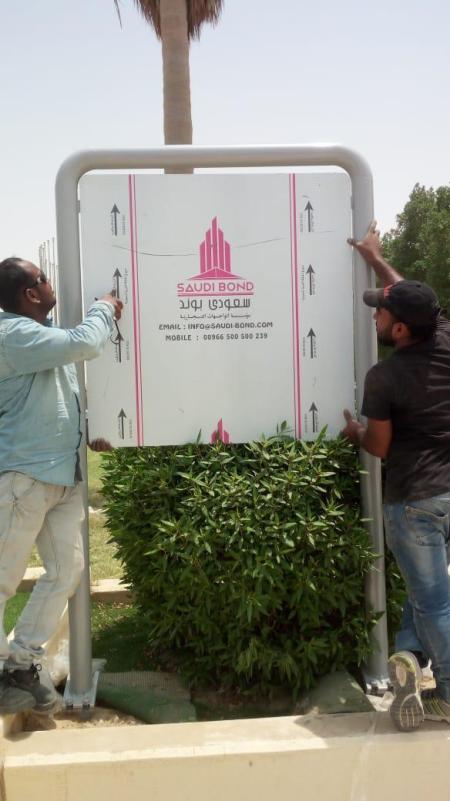
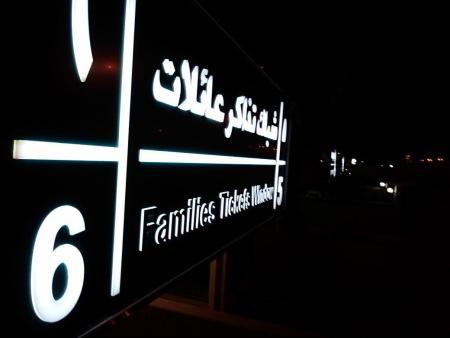
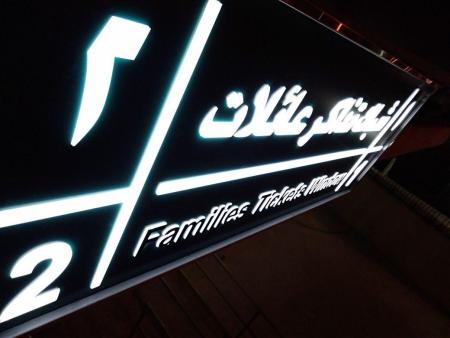
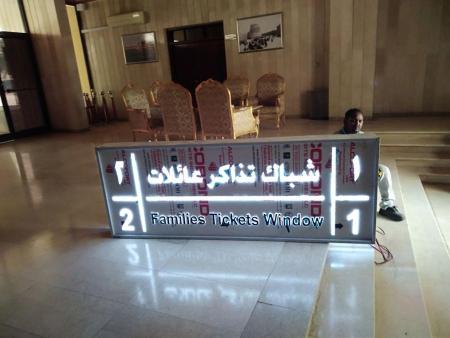
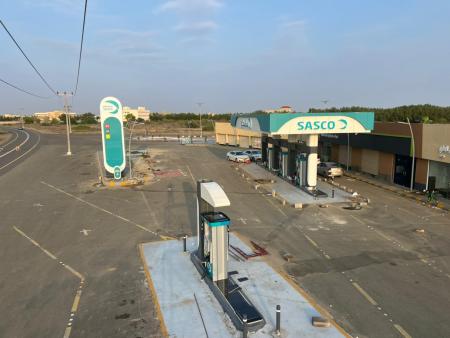
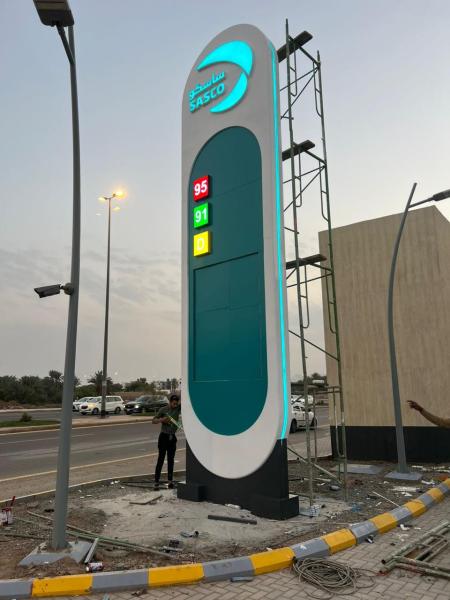
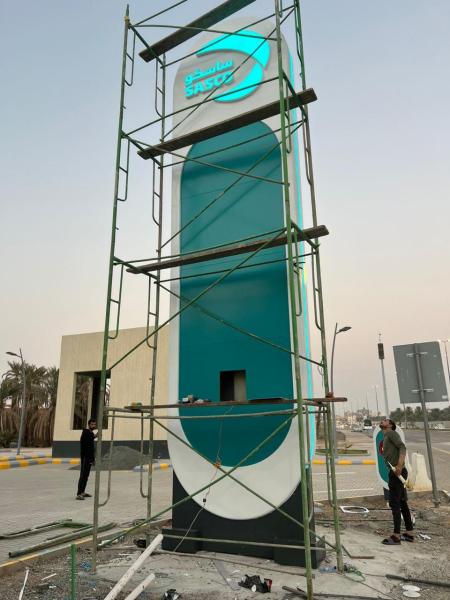
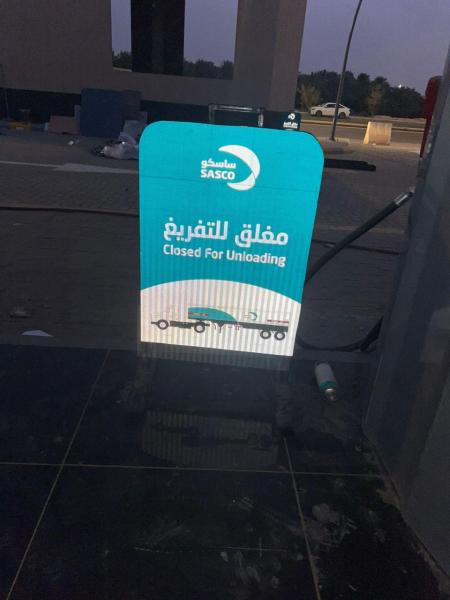
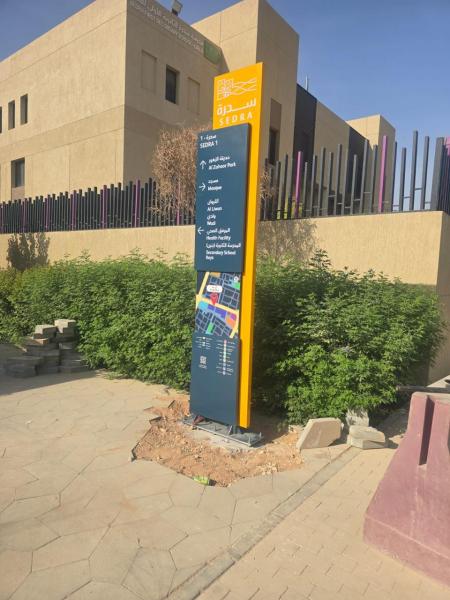
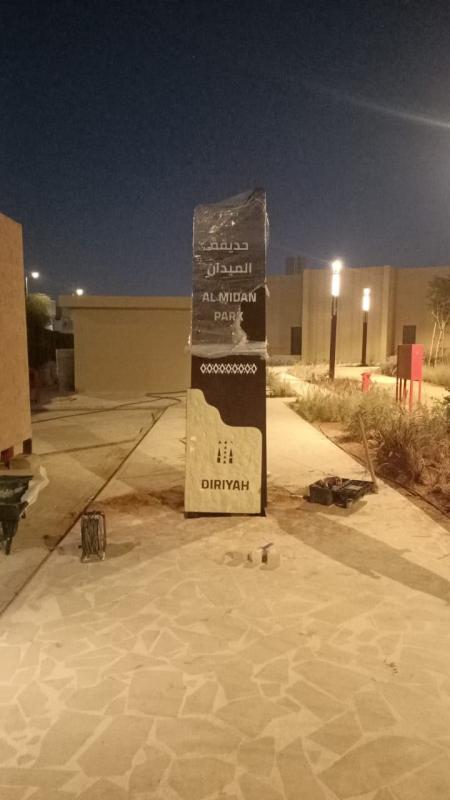
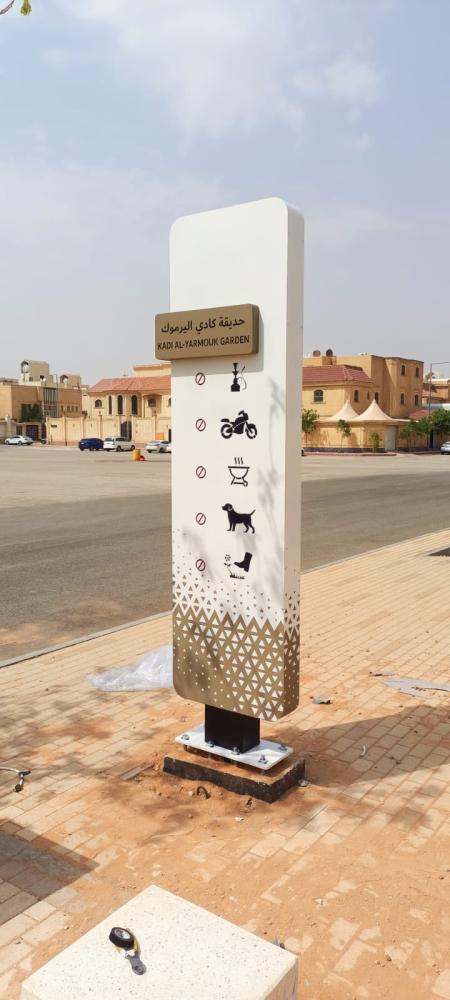
A Pylon Sign is a self-standing advertising or identification sign, typically elevated for clear visibility from a distance. Pylons are used at the entrances of companies, real estate developments, commercial complexes, hotels, hospitals, factories, industrial zones, universities, and major destinations.
They can be designed in many forms and sizes — from a simple, elegant identification panel to a large multi-face, multi-level structure — and may include the project name, logo, identification elements, and lighting. A pylon simultaneously functions as identification, wayfinding, advertising, and a visual identity builder.
Pylon signs are also known by several names depending on the country and format: Monument Sign, Freestanding Sign, Entrance Sign, Totem Sign, and Directory Pylon. These terms can all be used when searching for this type of outdoor signage.
A Landmark Sign is a distinctive visual marker designed to become part of the project's identity and overall appearance. Unlike a traditional sign board, a landmark can be an integrated architectural and advertising composition combining metal structures, cladding, dimensional letters, lighting, and various materials.
It is typically positioned at a strategic point or at the project entrance so that it becomes a clear reference point by which visitors recognize the location. Over time, a landmark may become part of the project's memory and visual image — simply seeing the design can be enough to identify the place or brand.
A distinctive sign does not begin on a fabrication machine — it begins with a considered idea. At Window Advertising we study the project identity, site characteristics, sign dimensions, viewing distance, and the direction of vehicle and pedestrian traffic. We then translate these inputs into a design that combines creativity, elegance, clarity, visual impact, and brand recognition. The goal is a result that does not look like a conventional sign, but rather like an integral part of the project's architecture and visual identity.
Selecting the right materials is among the most important factors in the success of a pylon or landmark sign. Multiple materials and techniques can be combined to achieve the desired final appearance.
Steel sections and metal structures are used to fabricate the internal frame of pylons and landmark signs, especially for large and tall works. Section sizes and fabrication methods are determined according to the design dimensions, project requirements, loads, and site conditions.
Cladding is applied to cover structures and exterior surfaces, giving the sign a modern, elegant appearance with the ability to select colors and finishes that align with the project's visual identity. Cladding can be shaped, cut, and prepared to match the required design.
CNC cutting and engraving enables precise execution of cuts, engravings, perforations, logos, geometric forms, decorative elements, and light apertures. CNC can be combined with cladding, acrylic, and stainless steel to produce precise and distinctive designs that add an element of visual impact to the sign.
Acrylic is used in letters, logos, and illuminated faces, and can be combined with internal LED lighting to achieve a clear and attractive visual effect. A popular premium finish combines acrylic with a gold or silver stainless steel face, producing a luxurious, contemporary appearance.
Stainless steel can be used for letters, logos, and decorative elements, with various finish options: gold, silver, mirror, and brushed. Combined with acrylic and internal lighting, it presents letters and logos in a more refined, premium manner.
Lighting is a core element in many pylon and landmark sign designs. Internal LED lighting can be applied to letters or sign faces, with the option of front, back, or halo lighting depending on the design. When lighting is combined with acrylic, stainless steel, or cladding, distinctive visual effects are achievable that make the sign clear and prominent during nighttime hours. The landmark transitions from a daytime identification element into an illuminated visual presence that works around the clock.
Execution passes through several integrated stages: site study covering the sign's location, area, viewing directions, and surrounding factors; concept and design development aligned with the project identity; steel frame fabrication and preparation of fixing points and cladding; application of cladding, aluminum, acrylic, or stainless steel per design; fabrication of dimensional letters and logos in the appropriate materials with integrated lighting; CNC cutting, engraving, and fine detail work; LED installation within letters or across the sign face for uniform illumination; and final assembly, preparation for transport, and on-site installation.
Large and tall signs require an appropriate anchoring system. The standard method uses a concrete foundation with steel flanges and anchor bolts. The concrete base is prepared to match the sign design and site requirements, the steel flanges are fixed, and the frame is secured with anchor bolts before the cladding, letters, and lighting are installed. Base dimensions, flange specifications, and anchor bolt quantities vary per project depending on sign size, height, loads, site conditions, and applicable engineering requirements.
These solutions serve a wide range of sectors and project types: corporate headquarters and main offices, real estate developments, residential compounds, shopping malls and commercial complexes, hotels and resorts, hospitals and medical centers, factories and industrial zones, universities and schools, administrative centers and government projects, exhibitions and entertainment destinations, tourism projects, fuel stations, and primary entrances to major developments.
A pylon sign is a freestanding elevated sign used primarily for identification and visibility from a distance. A landmark sign is a broader concept — it is an architectural and advertising composition designed to become an iconic visual marker for the project, often combining structural, decorative, and lighting elements in a more elaborate format than a standard pylon.
Window Advertising works with steel structural sections, aluminum cladding, acrylic panels, stainless steel (mirror, brushed, gold, silver), CNC-cut elements, and integrated LED lighting systems. Materials are selected and combined based on the design, environment, and desired finish.
Yes. Window Advertising provides a fully integrated service covering concept design, material selection, steel frame fabrication, cladding and letter production, CNC work, LED lighting, concrete foundation preparation, and on-site installation. Everything from the idea to the finished landmark.
Timeline depends on the sign's size, complexity, and site conditions. Standard pylon signs typically take 2 to 4 weeks from approved design to installation. Large or complex landmark signs with custom architectural elements may require additional time. A site visit and design brief allow us to provide a precise project schedule.
Tell us about your project — the intended location, approximate dimensions, and your visual identity requirements. Our team will visit the site, study the environment, and prepare a full design and pricing proposal covering fabrication, materials, lighting, foundation work, and installation.