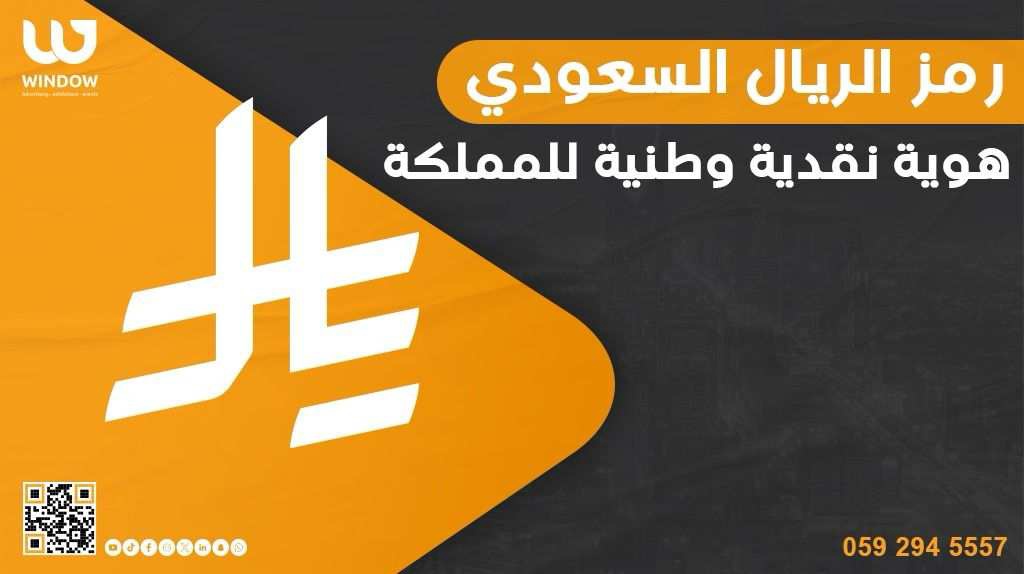
In a moment that marks both economic maturity and cultural pride, the Kingdom of Saudi Arabia has introduced an official symbol for the Saudi Riyal — joining the ranks of the world's most recognized currencies with their own distinctive typographic marks. This is not merely a design decision. It is a national achievement that reflects decades of economic transformation, from the founding financial vision of King Abdulaziz to the ambitious goals of Vision 2030. The Riyal symbol carries within its lines the heritage of Arabic calligraphy, the precision of Islamic geometric art, and the confidence of a G20 economy stepping firmly onto the global stage. In this comprehensive article, Window Advertising Agency explores the significance of the Riyal symbol, its design heritage, its applications across the financial ecosystem, and what it means for the Kingdom's future.
The story of the Saudi Riyal is inseparable from the story of the Kingdom itself. When King Abdulaziz ibn Abdul Rahman Al Saud established the foundations of a unified financial system in 1346 Hijri (1927 CE), the Kingdom was taking its first steps toward economic sovereignty. The introduction of a national currency was not just a financial necessity — it was a declaration of nationhood, a statement that the newly unified Kingdom would conduct its affairs with its own monetary identity.
In the decades that followed, the Saudi Riyal evolved from a regional currency into one of the most significant currencies in the global economy. The discovery of oil transformed the Kingdom's economic landscape, but it was deliberate financial policy — careful monetary management, strategic reserves, and institutional discipline — that gave the Riyal its enduring strength and stability.
Today, Saudi Arabia stands as a full member of the G20, representing one of the world's largest economies. The Saudi Riyal is pegged to the US Dollar, a policy that has provided decades of exchange rate stability and reinforced international confidence in the currency. The Kingdom's foreign reserves, managed by the Saudi Central Bank (SAMA), rank among the largest in the world.
Economic Milestone: Saudi Arabia's journey from the establishment of its first formal currency system under King Abdulaziz to G20 membership represents one of the most remarkable economic transformations of the modern era. The introduction of an official Riyal symbol is the latest milestone in this continuing journey — a visual declaration of economic confidence and cultural identity.
The Riyal symbol arrives at a moment when the Kingdom is actively reshaping its economy through Vision 2030, diversifying beyond oil, expanding financial services, and building digital infrastructure. The symbol is not retrospective — it is forward-looking, designed to represent the Riyal in a financial future defined by digital transactions, fintech innovation, and global integration.
The Saudi Central Bank — known by its Arabic acronym SAMA (Saudi Arabian Monetary Authority, now the Saudi Central Bank) — has been the guardian of the Kingdom's monetary system since its establishment in 1952. SAMA's mandate extends across monetary policy, banking supervision, currency issuance, and financial system stability. Every Saudi Riyal in circulation exists under SAMA's authority.
SAMA's decision to introduce an official currency symbol for the Riyal reflects a strategic understanding of how modern currencies function in the global economy. In an era where financial transactions are increasingly digital, where currencies are represented on screens more often than on paper, a recognizable symbol becomes an essential element of monetary identity.
The introduction of the Riyal symbol serves multiple strategic objectives that extend far beyond aesthetics:
Institutional Significance: SAMA's introduction of the Riyal symbol is consistent with the central bank's historical role as a modernizing force in Saudi finance. From establishing the first formal banking regulations to implementing real-time payment systems, SAMA has consistently ensured that the Kingdom's financial infrastructure meets the highest international standards.
The design of the Saudi Riyal symbol is a masterful fusion of cultural heritage and contemporary design principles. Unlike currency symbols that evolved organically from abbreviations — such as the Dollar sign ($) from the overlapping letters of "US" or the Pound sign (£) from the Latin word "libra" — the Riyal symbol was deliberately crafted to embody Saudi Arabia's artistic and cultural identity.
Arabic calligraphy is one of the most revered art forms in Islamic civilization. For centuries, calligraphers have transformed the Arabic script into works of breathtaking beauty, balancing aesthetic grace with structural precision. The Riyal symbol draws from this tradition, incorporating the fluid, organic forms of Arabic letterwork into a mark that functions in the demanding context of financial typography.
The calligraphic inspiration ensures that the symbol is not a generic geometric mark but a distinctly Saudi creation — one that anyone familiar with Arabic script can intuitively connect to the Kingdom's linguistic and artistic heritage. This is a profound design choice: the currency symbol becomes a carrier of culture, not just a marker of value.
Islamic geometric art, with its mathematical precision and infinite patterns, has influenced architecture, textiles, and decorative arts across the Muslim world for over a millennium. The Riyal symbol incorporates this geometric discipline, ensuring clean proportions, balanced symmetry, and visual harmony that allow the symbol to function at any size — from a small digit on a mobile screen to a large display on a currency exchange board.
Design Philosophy: The Riyal symbol achieves what the best currency symbols accomplish — it is simple enough to be instantly recognizable, distinctive enough to be unmistakable, culturally rooted enough to carry meaning, and technically precise enough to render cleanly across every medium from high-resolution screens to printed receipts.
The true achievement of the Riyal symbol's design lies in its ability to honor tradition without being constrained by it. The symbol is unmistakably rooted in Arabic artistic heritage, yet it functions as a modern typographic element that meets the technical requirements of digital systems, font standards, and international financial platforms. This balance between heritage and functionality mirrors Saudi Arabia's broader national trajectory — a kingdom that preserves its cultural identity while building a modern, diversified, globally integrated economy.
Currency symbols are among the most universally recognized typographic marks in the world. They transcend language, appearing on screens, signs, receipts, and documents in every country. The introduction of the Riyal symbol places Saudi Arabia's currency alongside the world's most established monetary marks.
| Currency | Symbol | Origin / Design Basis | Global Recognition Level |
| US Dollar (USD) | $ | Evolved from the abbreviation of "United States" or the Spanish Peso mark; widespread since the 18th century | Universal — recognized in virtually every country worldwide |
| Euro (EUR) | € | Designed in 1996 inspired by the Greek letter epsilon and the letter "E" for Europe; adopted in 1999 | Universal — used across 20 European nations and recognized globally |
| British Pound (GBP) | £ | Derived from the Latin word "libra" (a unit of weight); one of the oldest currency symbols still in use | Very high — centuries of international trade and financial prominence |
| Japanese Yen (JPY) | ¥ | Based on the Latin letter "Y" for Yen with horizontal strokes; adopted in the late 19th century | Very high — Japan's global economic influence since the postwar era |
| Indian Rupee (INR) | ₹ | Introduced in 2010; combines the Devanagari letter "Ra" with a horizontal line representing the Indian flag | Growing — rapidly increasing recognition with India's digital economy expansion |
| Saudi Riyal (SAR) | SAR Symbol | Inspired by Arabic calligraphy and Islamic geometric art; designed to blend Saudi heritage with modern financial typography | Emerging — positioned for rapid adoption across G20 financial systems and global platforms |
Strategic Positioning: The Saudi Riyal symbol enters the global stage with significant advantages. Saudi Arabia's G20 membership, its position as the world's largest oil exporter, and its ambitious Vision 2030 transformation mean the Riyal symbol will appear in contexts of high economic significance — energy trading, sovereign wealth operations, international investments, and a rapidly growing tourism sector.
Notably, the Indian Rupee symbol was only introduced in 2010, demonstrating that even major world economies have recently established official currency symbols. The Riyal symbol's introduction is part of a broader global trend toward formalizing currency identity in the digital age, where a standardized symbol is essential for clear communication across financial platforms, applications, and international systems.
The introduction of the Riyal symbol is not a ceremonial gesture — it has practical, far-reaching implications across every layer of the Kingdom's financial ecosystem. The symbol will be integrated into systems and touchpoints that millions of people interact with daily, fundamentally changing how Saudi Riyal amounts are displayed, processed, and understood.
Banks across Saudi Arabia will incorporate the Riyal symbol into their digital interfaces, mobile banking applications, account statements, and ATM screens. This integration standardizes how monetary values appear to customers, replacing text abbreviations like "SAR" or "SR" with a clean, universally recognized mark.
The Saudi stock exchange (Tadawul), one of the largest in the Middle East and Africa, will use the Riyal symbol in trading interfaces, market data feeds, and investor reports. For international investors, the symbol provides instant visual recognition of Saudi Riyal-denominated assets.
Official economic publications, budget documents, and statistical reports issued by Saudi government entities will adopt the symbol, creating visual consistency across all public financial communications.
Saudi Arabia's rapidly growing e-commerce sector — fueled by high smartphone penetration and digital payment adoption — will display the Riyal symbol on product listings, checkout pages, digital wallets, and payment confirmations. This is perhaps the most visible application, affecting millions of daily consumer transactions.
Commercial invoices, contracts, purchase orders, and financial statements across the private sector will integrate the symbol, replacing varied text abbreviations with a standardized mark that enhances professionalism and clarity.
Physical retail environments — from hypermarkets to luxury boutiques — will display the Riyal symbol on price tags, shelf labels, and promotional signage, creating a unified visual language for pricing across the Kingdom.
Ecosystem Scale: The Riyal symbol will touch virtually every financial interaction in Saudi Arabia — from a consumer checking a price tag in a Riyadh mall to an international investor reviewing Tadawul market data in London. The scale of integration reflects the symbol's importance as both a practical financial tool and a national identity element.
Vision 2030, the Kingdom's ambitious national transformation program, provides the strategic context in which the Riyal symbol gains its deepest significance. Under the leadership of Crown Prince Mohammed bin Salman, Saudi Arabia is building a diversified, innovation-driven economy that reduces dependence on oil revenue and positions the Kingdom as a global leader in tourism, entertainment, technology, and financial services.
The Riyal symbol serves Vision 2030 in multiple dimensions:
Vision 2030 Alignment: The Riyal symbol is not an isolated initiative — it is part of a comprehensive national strategy to modernize every aspect of Saudi Arabia's economy and society while preserving and celebrating the Kingdom's unique cultural identity. Every time the symbol appears on a screen, a document, or a sign, it carries the dual message of Vision 2030: progress and heritage, modernization and identity.
Looking ahead, the Riyal symbol will likely be integrated into Unicode standards, major operating systems, and international font libraries — following the path of the Indian Rupee symbol, which achieved Unicode inclusion in 2010. This technical standardization will ensure that the Riyal symbol renders correctly on every device and platform worldwide, further cementing its place in the global financial typography.
Currency symbols may appear to be simple typographic conveniences, but their impact on economic perception and national branding is substantial. A currency symbol is the most frequently seen representation of a nation's economic system — it appears on every receipt, every price tag, every financial report, and every digital transaction. Its presence shapes how both citizens and international observers perceive the currency's strength, stability, and significance.
Studies in behavioral economics show that familiar symbols increase trust and reduce cognitive friction in financial transactions. When a consumer sees a recognized currency symbol, their brain processes the monetary value faster and with greater confidence than when reading a text abbreviation. This effect is amplified in international contexts, where a distinctive symbol helps foreign investors and traders quickly identify and process Saudi Riyal-denominated figures.
| Factor | Impact of Having a Dedicated Symbol | Impact of No Symbol (Text Abbreviation Only) |
| Transaction processing speed | Faster recognition and value assessment in financial interfaces | Slower processing as the brain reads and interprets text abbreviations |
| International recognition | Instant visual identification across languages and markets | Abbreviations may be confused with other currencies (e.g., SAR vs. ZAR) |
| Digital interface clarity | Clean, compact representation in apps, dashboards, and screens | Text abbreviations consume more space and disrupt visual hierarchy |
| National economic branding | Symbol reinforces sovereign economic identity in every display | Currency appears generic and less established in global contexts |
| Cultural representation | Design elements carry national heritage and artistic identity | Text abbreviations carry no cultural or artistic meaning |
Common Misconception: Some may view a currency symbol as merely decorative. In reality, it functions as a core element of national economic infrastructure — similar to a country's flag or coat of arms. The symbol represents the full weight of the nation's monetary authority, financial stability, and economic credibility every time it appears in any financial context.
At Window Advertising Agency, the introduction of the Riyal symbol resonates deeply with our core expertise: identity design, precision printing, and the creation of materials that carry institutional authority. For over 25 years, Window has served banks, financial institutions, government entities, and private corporations across Saudi Arabia with services that demand the highest levels of design accuracy, print quality, and brand consistency.
Window specializes in creating and refining brand identity systems for financial organizations — banks, investment firms, fintech companies, and insurance providers. The introduction of the Riyal symbol creates new opportunities and requirements for these institutions to update their visual systems, incorporating the symbol into existing brand guidelines, stationery, signage, and digital assets.
Financial documents — from certificates and official reports to shareholder communications and regulatory filings — require printing that meets exacting standards of quality, accuracy, and security. Window's printing capabilities ensure that the Riyal symbol is reproduced with precision across all printed financial materials, maintaining its integrity at every size and in every context.
Banks and financial institutions frequently produce promotional and educational materials related to currency — from brochures explaining new security features on banknotes to campaigns promoting digital payment adoption. The Riyal symbol's introduction creates a new category of communication needs, and Window is equipped to produce these materials with the professionalism and regulatory compliance that financial communications demand.
25+ Years of Financial Expertise: Window Advertising Agency has produced identity systems, printed materials, and promotional campaigns for some of Saudi Arabia's most prominent financial institutions. Our understanding of the precision, compliance, and institutional authority required in financial communications makes us the trusted partner for organizations integrating the Riyal symbol into their visual ecosystem.
Beyond its functional applications in banking, commerce, and digital systems, the Saudi Riyal symbol carries a profound emotional dimension. For Saudi citizens, it represents the strength and stability of their national economy — an economy that has grown from the foundational vision of King Abdulaziz to one of the most influential in the world.
The symbol's roots in Arabic calligraphy and Islamic art ensure that it is not a borrowed or generic mark. It is distinctly Saudi, distinctly Arabic, and distinctly rooted in a cultural tradition that spans centuries. Every time a citizen sees the symbol on a price tag, a bank statement, or a mobile payment screen, they see a reflection of their national heritage expressed through the language of modern economics.
For the international community, the Riyal symbol communicates that Saudi Arabia's currency is backed by a modern, confident, and culturally proud nation. It signals institutional maturity — a country that has achieved the economic sophistication to formalize every element of its monetary identity, down to the typographic symbol that represents it.
A National Moment: The introduction of the Riyal symbol is a moment of collective pride — a tangible, visual milestone in the Kingdom's economic journey. Like the flag, the national anthem, and the emblem, the currency symbol becomes part of the visual vocabulary of Saudi national identity, appearing in the most universal context of all: the daily financial transactions that touch every citizen's life.
This is what elevates the Riyal symbol from a design project to a national achievement. It is not merely a mark that identifies a currency — it is a statement that the Kingdom of Saudi Arabia has arrived at a level of economic maturity, cultural confidence, and global presence where its currency deserves and commands its own symbol on the world stage.
Window Advertising Agency brings 25+ years of expertise in identity design, precision printing, and promotional materials for banks and financial institutions across Saudi Arabia. Whether you need to integrate the Riyal symbol into your brand system, produce high-quality financial documents, or create promotional campaigns — Window delivers with the precision and professionalism the financial sector demands.
The new Saudi Riyal currency symbol is an official typographic mark introduced by the Saudi Central Bank (SAMA) to represent the Saudi Riyal (SAR) in financial systems, digital platforms, and printed materials. Its design is inspired by Arabic calligraphy and Islamic geometric arts, blending Saudi heritage with modern financial standards to create a mark that is both culturally meaningful and technically functional.
A dedicated currency symbol strengthens the Riyal's identity in global financial markets, enhances confidence in the currency across digital and traditional economies, and showcases Saudi Arabia's national identity on every financial transaction worldwide — similar to how the Dollar ($), Euro (€), and Pound (£) are instantly recognizable. It also reduces confusion with text abbreviations that may overlap with other currencies.
The Riyal symbol draws from the rich tradition of Arabic calligraphy, incorporating flowing letterforms and geometric precision rooted in Islamic art. This design approach ensures the symbol carries deep cultural meaning while functioning as a clean, modern typographic mark suitable for digital screens, banking interfaces, and printed financial documents.
The symbol will be integrated across the entire financial ecosystem — banking systems, ATM screens, point-of-sale terminals, e-commerce platforms, trading platforms, economic reports, government financial documents, invoices, price tags, and digital payment applications. It will appear wherever monetary values in Saudi Riyals are displayed.
The Saudi Central Bank (SAMA), established in 1952, is the authority responsible for introducing and standardizing the Riyal symbol. SAMA oversees monetary policy, currency stability, and financial system regulation. The symbol introduction is part of SAMA's broader mandate to modernize Saudi Arabia's financial infrastructure and strengthen the Riyal's position internationally.
Vision 2030 aims to diversify Saudi Arabia's economy, expand digital financial services, and strengthen the Kingdom's position as a global economic leader. The Riyal symbol supports these goals by giving the currency a recognizable identity in international markets, facilitating digital transactions, and projecting the Kingdom's economic sovereignty and cultural pride on the world stage.
Like the US Dollar ($), Euro (€), British Pound (£), and Japanese Yen (¥), the Saudi Riyal symbol provides instant recognition and streamlined representation in financial contexts. While established currency symbols have decades of global adoption, the Riyal symbol is designed from the start for both traditional and digital financial environments, giving it a modern advantage.
Yes. Window Advertising Agency specializes in identity design, financial document printing, and promotional materials for banks and financial institutions. With over 25 years of experience, Window produces high-security printed materials, brand identity systems for financial organizations, and promotional campaigns that incorporate currency elements with precision and regulatory compliance.