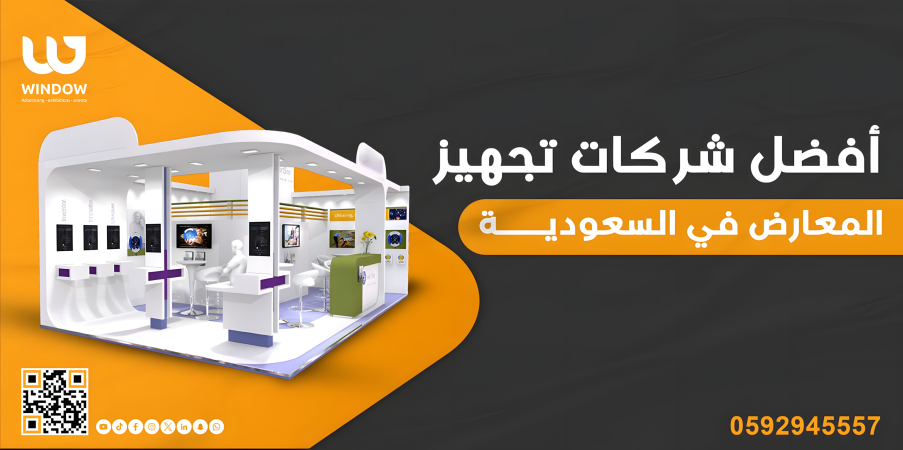
Exhibitions and events remain among the most powerful marketing channels for businesses seeking direct engagement with their target audience. In a world increasingly dominated by digital interactions, face-to-face encounters at a well-designed booth create lasting impressions that no online ad can replicate. This comprehensive guide walks you through every aspect of exhibition success — from conceptualizing a striking booth design to selecting promotional gifts that keep your brand in customers' hands long after the event ends. Window Advertising Agency, with over 25 years of hands-on experience in the Saudi market, shares the strategies that consistently deliver measurable results.
Despite the rapid growth of digital marketing, exhibitions continue to deliver unique advantages that cannot be replicated through screens alone. Physical presence at a trade show provides multisensory brand experiences — visitors can see, touch, and interact with your products in real time, building a level of trust that digital channels struggle to achieve.
Industry Insight: According to the Trade Show News Network, exhibitions and events build brand awareness by more than 60%, making them one of the highest-impact marketing activities available to businesses of any size.
Exhibitions also serve as concentrated networking environments where decision-makers from your industry gather in a single venue. A three-day event can generate more qualified leads than months of cold outreach. For companies operating in the Saudi market — where personal relationships and trust play a central role in business decisions — exhibitions offer an irreplaceable opportunity to establish credibility face-to-face.
Your exhibition booth is more than a physical structure — it is the three-dimensional embodiment of your brand. Every element, from the color palette to the lighting angle, communicates a message to visitors before a single word is spoken. Understanding the core components of booth success allows you to invest your budget where it generates the highest return.
Visitors form their initial impression of your booth within the first three seconds of seeing it. Your visual design must instantly communicate who you are, what you offer, and why a visitor should stop. This means bold branding, clear messaging hierarchy, and a color scheme that aligns with your corporate identity while standing out from neighboring booths.
Static displays are no longer sufficient. Modern exhibition booths incorporate interactive elements that transform passive observers into active participants. Touchscreen product configurators, virtual reality experiences, live demonstrations, and gamified engagement stations all increase dwell time — the single strongest predictor of lead conversion at events.
Professional lighting design can elevate an average booth to a premium experience. Strategic use of accent lighting draws attention to key products, ambient lighting creates atmosphere, and backlit graphics ensure your branding remains visible from across the exhibition hall. Poorly lit booths signal a lack of professionalism and are often subconsciously avoided by visitors.
Your booth should communicate one primary message with absolute clarity. Visitors navigating a busy exhibition floor have limited attention. A focused value proposition displayed prominently — supported by no more than three secondary messages — outperforms booths cluttered with text, competing visuals, and unfocused messaging.
| Booth Element | Purpose | Impact on Visitor Engagement |
|---|---|---|
| Visual Design | Brand recognition and attraction | Controls first-impression perception within 3 seconds |
| Interactive Features | Engagement and dwell time | Increases lead capture rates by up to 45% |
| Professional Lighting | Atmosphere and product highlighting | Improves booth visibility from 30+ meters away |
| Clear Messaging | Value proposition communication | Reduces visitor confusion, increases inquiries |
| Traffic Flow Design | Visitor movement and comfort | Prevents bottlenecks, enables natural exploration |
A successful exhibition booth does not appear overnight. It is the result of a structured process that moves through five distinct stages, each building upon the previous one. Skipping or rushing any stage inevitably leads to compromised results, wasted budgets, or last-minute crises on the exhibition floor.
Every exceptional booth begins with thorough research. This stage involves analyzing the exhibition venue specifications, understanding the target audience profile, studying competitor participation history, and defining clear objectives. What does success look like? Lead generation targets, brand awareness goals, product launch metrics — all must be established before a single design sketch is made.
With research complete, the creative team translates strategic objectives into visual reality through detailed 3D renderings. These photorealistic models allow stakeholders to experience the booth virtually before committing to manufacturing. Every angle, sightline, and visitor pathway is tested digitally, ensuring the final design maximizes both aesthetics and functionality.
Precision manufacturing transforms approved designs into physical structures. This stage demands expertise in materials selection — lightweight aluminum frames for easy transport, high-quality acrylic panels for premium finishes, durable flooring systems for heavy foot traffic. At Window Agency, our in-house manufacturing capabilities ensure quality control at every step, from raw material to finished components.
Installation is where planning meets reality. Experienced installation teams must work within tight venue schedules, often completing full booth assembly within 24-48 hours. This stage includes structural assembly, electrical and lighting setup, graphic panel installation, technology integration, and final quality inspection before the exhibition doors open.
The work does not end when the event begins. Professional booth management includes daily cleaning, graphic replacement if damaged, lighting adjustments, technology troubleshooting, and on-call support throughout the event duration. This ongoing maintenance ensures your booth looks as impressive on the final day as it did at opening.
Window's Approach: We assign a dedicated project manager to every exhibition project who oversees all five stages from initial concept through event completion. This single point of accountability eliminates communication gaps and ensures seamless execution from start to finish.
Promotional gifts are far more than giveaway items — they are tangible brand extensions that continue working long after the exhibition closes. A well-chosen promotional gift creates a physical connection between your brand and the recipient, serving as a daily reminder of your company, your values, and your offerings.
Research Finding: According to the Advertising Specialty Institute (ASI), 80% of recipients remember the brand that gave them a promotional product, and 83% of people are more likely to do business with that brand afterward.
Choosing the right promotional gift requires balancing multiple factors. Random selection of cheap items does more harm than good — a low-quality gift reflects poorly on your brand. Instead, every promotional product should be evaluated against three critical criteria:
| Gift Category | Best Audience | Average Recall Rate | Cost Range |
|---|---|---|---|
| Premium Executive Gifts | C-level decision-makers | Very High | $$$ |
| Tech Accessories | Professionals and tech-savvy visitors | High | $$ |
| Branded Stationery | General business audience | Medium-High | $-$$ |
| Eco-Friendly Products | Sustainability-conscious audiences | High | $$ |
| Custom Apparel | Mass audience events | Medium | $-$$ |
Common Mistake: Never distribute generic, unbranded items at exhibitions. Every promotional gift must carry your logo, brand colors, and ideally your website URL. An unbranded gift is a missed opportunity that benefits no one.
The visual impact of your exhibition presence depends heavily on the quality and type of printing used across your booth, banners, and marketing materials. Different printing technologies serve different purposes, and understanding which to use — and when — can significantly affect both visual impact and budget efficiency.
Large-format banner and flex printing remains the backbone of exhibition signage. These versatile materials are ideal for overhead banners, entrance displays, and directional signage. Modern flex printing delivers vibrant colors on durable, weather-resistant materials suitable for both indoor and outdoor events.
Self-adhesive vinyl printing is essential for booth wall graphics, floor graphics, and vehicle wraps for event transport. Vinyl offers superior adhesion to curved and irregular surfaces, making it the preferred choice for custom booth structures that go beyond flat panels.
For premium booth constructions, printed cladding panels provide a seamless, high-end appearance. These rigid panels eliminate wrinkles and sagging associated with fabric or flex materials, delivering a crisp, professional finish that communicates quality and permanence.
When photographic quality is essential — product images, lifestyle photography, or detailed infographics — high-resolution digital printing delivers exceptional clarity at any viewing distance. This technology is particularly important for backlit graphics and close-up product displays where pixel density matters.
| Print Type | Best Application | Durability | Visual Quality |
|---|---|---|---|
| Banner/Flex | Overhead signage, entrance displays | High (indoor/outdoor) | Good |
| Vinyl | Wall wraps, floor graphics, vehicles | Very High | Very Good |
| Cladding Panels | Premium booth structures | Excellent | Excellent |
| High-Res Digital | Product photos, backlit graphics | Good | Outstanding |
Window Advertising Agency offers end-to-end exhibition solutions that eliminate the complexity of coordinating multiple vendors. With over 25 years of experience delivering successful exhibition projects across Saudi Arabia and the Gulf region, we bring proven expertise to every stage of your event presence.
One Partner, Complete Solution: By handling design, manufacturing, printing, gifts, and installation under one roof, Window eliminates coordination delays, reduces costs through integrated production, and ensures visual consistency across every element of your exhibition presence.
Participating in an exhibition is a significant investment. These nine proven strategies ensure you extract maximum value from every event:
Critical Reminder: The biggest exhibition ROI killer is poor follow-up. Studies consistently show that 80% of trade show leads are never followed up on. Build your follow-up plan before the event starts, not after it ends.
Exhibition budgeting requires careful planning across multiple cost categories. Understanding typical budget allocation helps you invest wisely and avoid unexpected expenses that erode your return on investment.
| Budget Category | Typical Allocation | Key Considerations |
|---|---|---|
| Booth Design & Construction | 30-35% | Reusable modular designs reduce long-term costs |
| Space Rental | 20-25% | Corner and island positions cost more but deliver better traffic |
| Graphics & Printing | 10-15% | Invest in quality — printing is what visitors see first |
| Promotional Gifts | 8-12% | Tiered gift strategy optimizes spend per lead quality |
| Staffing & Travel | 10-15% | Well-trained staff deliver higher conversion rates |
| Technology & AV | 5-10% | Screens, touchpoints, and connectivity infrastructure |
| Contingency | 5-10% | Always budget for unexpected costs and last-minute needs |
Your exhibition partner can make or break your event success. The right agency brings not just creative talent but also logistical expertise, manufacturing capability, and on-the-ground support that transforms your vision into reality without the headaches of managing multiple contractors.
Window Advertising Agency checks every box. With in-house design studios, manufacturing workshops, printing facilities, and experienced installation teams, we deliver seamless exhibition experiences that consistently exceed client expectations.
From concept to completion, Window Advertising Agency delivers exhibition solutions that generate results. Let us design, build, and manage your next booth.
For a standard booth, begin planning at least 8-12 weeks before the event. Custom-designed large booths may require 16-20 weeks. This timeline allows adequate time for concept development, 3D design approval, manufacturing, and shipping logistics without last-minute compromises.
Custom booth costs vary significantly based on size, complexity, and materials. A standard 3x3 meter booth starts from moderate budgets, while large island booths with premium finishes and integrated technology represent higher investments. Window Agency provides detailed quotations tailored to your specific requirements and budget.
Absolutely. Modular booth designs are specifically engineered for reuse across multiple events. With proper storage and maintenance, a well-constructed modular booth can serve 10-15 events, dramatically reducing your per-event cost. Window offers booth storage and refurbishment services between events.
For B2B events, practical technology accessories (power banks, wireless chargers), premium stationery (leather notebooks, quality pens), and branded office items deliver the highest recall rates. The key is selecting items your recipients will use regularly, keeping your brand visible in their daily professional life.
Yes. Window Advertising Agency executes exhibition projects across all major Saudi cities including Jeddah, Dammam, and Khobar, as well as international exhibitions in the Gulf region. Our logistics team manages transportation, installation, and on-site support regardless of location.
We provide the full spectrum of event printing: large-format banner and flex printing, self-adhesive vinyl for walls and floors, rigid cladding panels for premium booths, high-resolution digital printing for photography and detailed graphics, plus all supporting collateral including brochures, flyers, and business cards.
Key metrics include number of qualified leads captured, cost per lead compared to other marketing channels, meetings scheduled, media mentions generated, social media engagement during the event, and ultimately sales conversions tracked over the 3-6 months following the exhibition.